Thursday, 24 December 2015

My Love Story, Before Social Networks:
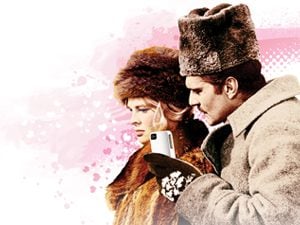
movie still with phone
Sometimes when I’m watching old movies, I can’t help dwelling on the crucial plot devices that have been lost to, well, devices. The missed call, which today rings in our pockets. The long-lost love, who now lives forever in our Twitter feed.

Consider Doctor Zhivago: A chance sighting of Lara on a city street leads Yuri’s heart to rupture as she disappears before Yuri can reach her. Had the Internet been around during the Bolshevik Revolution, Yuri and Lara never would have lost each other. They would have been Facebook “comrades.”
Consider the plot twists in our own lives, moments that hinged on uncertainty, when all information was not laid out before us. Modern technology has made our world smaller and our lives easier, but 
perhaps it has also diminished life’s mysteries, and with them, some sense of romance.
In the summer of 1991, without social networks to tether us, I felt such heart-bursting longing for a woman I loved that I traveled across two countries and an ocean to make sure she would not wander out of my life. It was only in her absence that I was able to appreciate the depth of love I felt.
I met Joelle in March while I was still in college. She had recently graduated and was knocking around Peoria, Illinois, her hometown,
figuring out her next step. After two chance meetings, we began going out. Before long, we were rarely apart.
We spent less time with our friends, who could not track the electronic footprints of our relationship. The outside world fell away, and it became just us, slowly unlocking each other’s secrets, which in those days were not posted on “walls” for anybody to scroll through.
But our time together was coming to an end. Before we met, I had planned a summer backpacking adventure across Europe, and Joelle had been talking about a move to Chicago. I told her I would write, and I gave her the address of a friend in Wales, where I would be with my parents at the midpoint of my trip.
After landing in Frankfurt, Germany, I visited the Roman ruins in Trier, spent the summer solstice in Strasbourg, and saw a rock concert in a soccer stadium packed with 50,000 Germanic-looking bikers in Basel. In Budapest, my ancestral home, I heard church choirs and stood before masterworks of art. It was beautiful.
And I was miserable. I could not have been lonelier. All I could think about was Joelle.
Sitting alone on a bench outside St. Stephen’s Cathedral in Vienna, eating street schnitzel, I wished I were in Peoria, sitting across from her. I wrote her letters as if I could will her into my trip—long, heartfelt missives.
By the time I reached London to rendezvous with my parents, I was inconsolable. The distance between us had become unfathomable, and my spirits sank to a depth I had never known. I sobbed and pouted and slunk around London for three days.
Finally, my father suggested (insisted, really) that I just call her.
So from our hotel room in London, I called Peoria. Except that Joelle wasn’t in Peoria. Her mother told me that she had packed up and moved to Chicago. My letters, she said, were sitting there on the table, unopened.
I called Chicago next but was unable to reach her. There was no answer, no machine, no voice mail, no caller ID to show the missed call. Just a landline ringing in an empty apartment. There was no way of knowing where she was or when she would be back. I became gripped by jealousy, panicked by the idea of her settling into a new life.
Here I was in Europe, weeping in front of relics for all the wrong reasons, and she was gallivanting around Chicago meeting people? It seemed ludicrous to admit I somehow thought she might hang around Peoria, waiting for me, but that was, it occurred to me, exactly what I had expected.
My parents and I drove to Wales the next day, and when there was no letter from Joelle waiting, I broke down into a blubbering mess. My body was in Wales, surrounded by craggy green hills and bleating sheep, but my heart was in Chicago.
My parents put me on a train back to London to catch the next flight home. At Heathrow, however, I was told that the round-trip airline ticket my parents had bought me could be used only out of Paris. So it was off to Dover, where I caught a ferry across the channel.
The boat was filled with fellow students, and as we staggered off in Calais and rode the night train to Paris, I regaled them with my tale of woe.
Forget it, they said. One guy said that he was meeting buddies in Pamplona to run with the bulls and that I should join. A girl was headed to France to wait on tables and lie on the beach. “Come with,” she offered.
“No, no,” I said. “If I don’t get back, I’m going to lose her.”
I was roundly ridiculed, and they said I would forever regret cutting short this once-in-a-lifetime trip.
In Paris, I headed straight for Charles de Gaulle Airport. I’d be in Chicago soon. All I had to do was get on a plane.
But I couldn’t get on a plane. Inside the United terminal, it was utter chaos, with people 40 deep at the ticket counter. I would not be getting on the next plane—or any other.
Exhausted, I lugged my backpack toward the trains, tears in my eyes. What a disaster. Stuck in Paris for three weeks! Could things be worse?
But as I left the United terminal, I found myself in the British Airways wing. I was facing three smiling ticket agents.
“You don’t happen to have any seats today?” I asked.
“We have seats,” one said, “but the plane leaves in 20 minutes.”
The one-way ticket cost twice what my parents paid for my round-trip fare. I glanced at my credit card: “For emergency use only.”
I bought the ticket. This was the part I didn’t tell my parents.
At least not until four years later, on the night before Joelle and I married. I confessed it after my father told a roomful of friends and family the tale of the despondent boy who chose love over bleating sheep, Roman ruins, and all the wine in Paris.


The Stranger Who Changed My Life: A Short Love Story

The Stranger Who Changed My Life: A Short Love Story :


Joni Rodgers          

 In1983, I was traveling with a tiny theater company doing vaudeville-type shows in 
community centers and bars—anywhere we could earn $25 each plus enough gas money to get to the next small town in our ramshackle yellow bus.
As we passed through Bozeman, Montana, in early February, a heavy snow slowed us down. The radio crackled warnings about black ice and poor visibility, so we opted to impose on friends who were doing a production of Fiddler on the Roof at Montana State University. See a show, hit a few bars, sleep on a sofa: This is as close to prudence as it gets when you’re an itinerant 20-something troubadour.
After the show, well-wishers and stagehands milled behind the curtain. I hugged my coat around me, humming that “If I Were a Rich Man” riff from the show, aching for sunrise and sunset, missing my sisters. What a wonderful show that was—and is.
A heavy metal door swung open, allowing in a blast of frigid air, and clanged shut behind two men who stomped snow from their boots. One was big and bearlike in an Irish wool sweater and gaiters; the other was as tall and skinny as a chimney sweep in a peacoat.
“… but I’m just saying, it would be nice to see some serious theater,” one of them said. “Chekhov, Ibsen, anything but this musical comedy shtick.”
“Excuse me?” I huffed, hackles raised. “Anyone who doesn’t think comedy is an art form certainly hasn’t read much Shakespeare, have they?”
I informed them that I was a “professional shticktress” and went on to deliver a tart, pedantic lecture on the French neoclassics, the cultural impact of Punch and Judy as an I Love Lucyprototype, and the importance of Fiddler on the Roof as both artistic and oral history. The shrill diatribe left a puff of frozen breath in the air. I felt my snootiness showing like a stray bra strap as the sweep in the peacoat rolled his eyes and walked away.
The bear stood there for a moment, an easy smile in his brown eyes. Then he put his arms around me and whispered in my ear, “I love you.”

Joni RodgersEdwin Fothingham/Matthew MahonItook in a deep, startled breath—winter, Irish wool, coffee, and fresh-baked bread—and then pushed away with a jittery half-joke. Something like, “Watch it. I have pepper spray.” “OK,” he said with a broad baritone laugh. “Come for a walk, then. It’ll be nice.” I shook my head. Alarm and skepticism warred with spreading, unsteady warmth behind my collarbone. “Walking around in the freezing dark with a total stranger is not nice,” I said. I tipped a glance to the well-worn gaiters. “Planning to do some cross-country skiing?”
“Riding my bike,” he said, and then added without apology, “I’m between vehicles.”
He held the heavy door open expectantly. I moved the pepper spray from my purse to my coat pocket and followed my heart out under the clear, cold stars.
“What are you reading?” I asked, because that question always opens doors of its own. I was in the habit of asking the nuns at the bus stop, a barber who paid me to scrub his floor once a week, elderly ladies and children at the park. To this day, I ask people who sit beside me on airplanes, baristas at Starbucks, exchange students standing in line with me. Over the years, “What are you reading?” has introduced me to many of my favorite books and favorite people.
The bear had a good answer: “Chesapeake. Have you read it?”
“No, but I love James Michener,” I said. “When I was 12, I fell in love with Hawaii and vowed that if I ever had a daughter, I’d name her Jerusha after the heroine.”
“Big book for a 12-year-old.”
“We didn’t have a TV. And I was a dork.”
He laughed that broad baritone laugh again. “Literature: last refuge of the tragically uncool.”
“Same could be said of bicycling in your ski gaiters.”
The conversation ranged organically from books and theater to politics and our personal histories.
Having embraced the life of an artsy party girl, I was the black sheep of my conservative Midwestern family, thoroughly enjoying my freedom and a steady diet of wild oats. He’d spent a dysfunctional childhood on the East Coast. A troubled path of drug and alcohol abuse had brought him to one of those legendary moments of clarity at which he made a hard right turn to an almost monkish existence in a tiny mountain cabin. He’d built an ascetic life that was solitary but substantive, baking bread at a local restaurant, splitting wood for his heating stove, staying out of trouble.
“That probably sounds pretty dull to you,” he said.
“Agonizingly dull, but don’t worry,” I said, and then patted his arm. “Maybe someday you’ll remember how to have fun.”
He shrugged. “Maybe someday you’ll forget.”
We talked about the things people tend to avoid when they’re trying to make a good impression: hopes subverted by mistakes, relationships sabotaged by shortcomings. My bus was leaving in the morning, and we would never see each other again, so there was no need to posture.
Fingers and chins numb with cold, we found refuge in a Four B’s Restaurant and sat across from each other in a red vinyl booth. We had enough money between us for a short stack of buckwheat pancakes. A few morning papers were delivered to the front door, and we worked our way through the crossword puzzle, coffee cups between our hands.

Joni and GaryMatthew MahonThesun came up, and we emerged from Four B’s to discover a warm chinook blowing in. Already the eaves were weeping, icicles thinning on trees and telephone wires. This is what Montana does in midwinter: clears off and gets bitter cold, and then suddenly it’s as warm and exhilarating as Easter morning. Don’t believe it for a minute, you tell yourself as the streets turn into trout streams, but the sheer pleasure of the feeling makes a fool of you. You forget your scarf and mittens on a hook behind the door. You know it’s still winter, but that’s just what you know; the chinook is what you believe in.
The bear held my hand inside his coat pocket as we walked in silence back to the parking lot to meet my company’s bus. Before he kissed me, he asked me if I was ready. Ready for what I have no idea, but ready is how I felt. I was stricken with readiness. Humbled by it.
“I hope you have a wonderful life,” I told him.
“You too,” he replied before nodding stiffly and walking away.
The bus lumbered through the slush and labored over the mountains to a fading Highline town where we were booked to play a quaintly shabby old opera house. The guy at the box office immediately pegged me as a party girl who’d been up all night and invited me to go to the bar next door for a hair of the dog before the show, but I could not for the life of me remember why that used to sound like fun.
Later that evening, as I did my shtick out on the foot-lit stage, I heard the bear’s distinctive baritone laughter from somewhere in the audience. After the show, he was waiting for me by the door. I didn’t bother asking him how he’d gotten there. He didn’t bother asking me where I wanted to go.
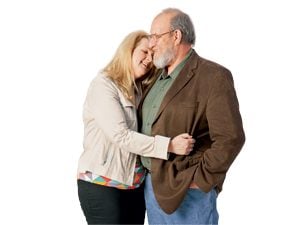
I can’t endorse the idea of love at first sight, but maybe there are moments when God or fate or some cosmic sense of humor rolls its eyes at two stammering human hearts and says, “Oh, for crying out loud.” I married the bear a few months later in a meadow above his tiny cabin in the Bridger Mountains. We weren’t exempted from any of the hard work a long marriage demands, but for better or worse, in sickness and in health, that moment of unguarded, chinook-blown folly has somehow lasted 30 years.
We laugh. We read. I do dishes; he bakes bread. Every morning, we work through the daily crossword puzzle. Our daughter, Jerusha, and son, Malachi Blackstone (named after his great-grandfather and an island in Chesapeake Bay) tell us we are agonizingly dull.
We listen to their 20-something diatribes and smile.
Joni Rodgers is the author of the bestselling memoir Bald in the Land of Big Hair.

“If You Find This Letter, Then It’s For You”: What It’s Like to Write Love Letters to Total Strangers


“If You Find This Letter, Then It’s For You”: What It’s Like to Write Love Letters to Total Strangers

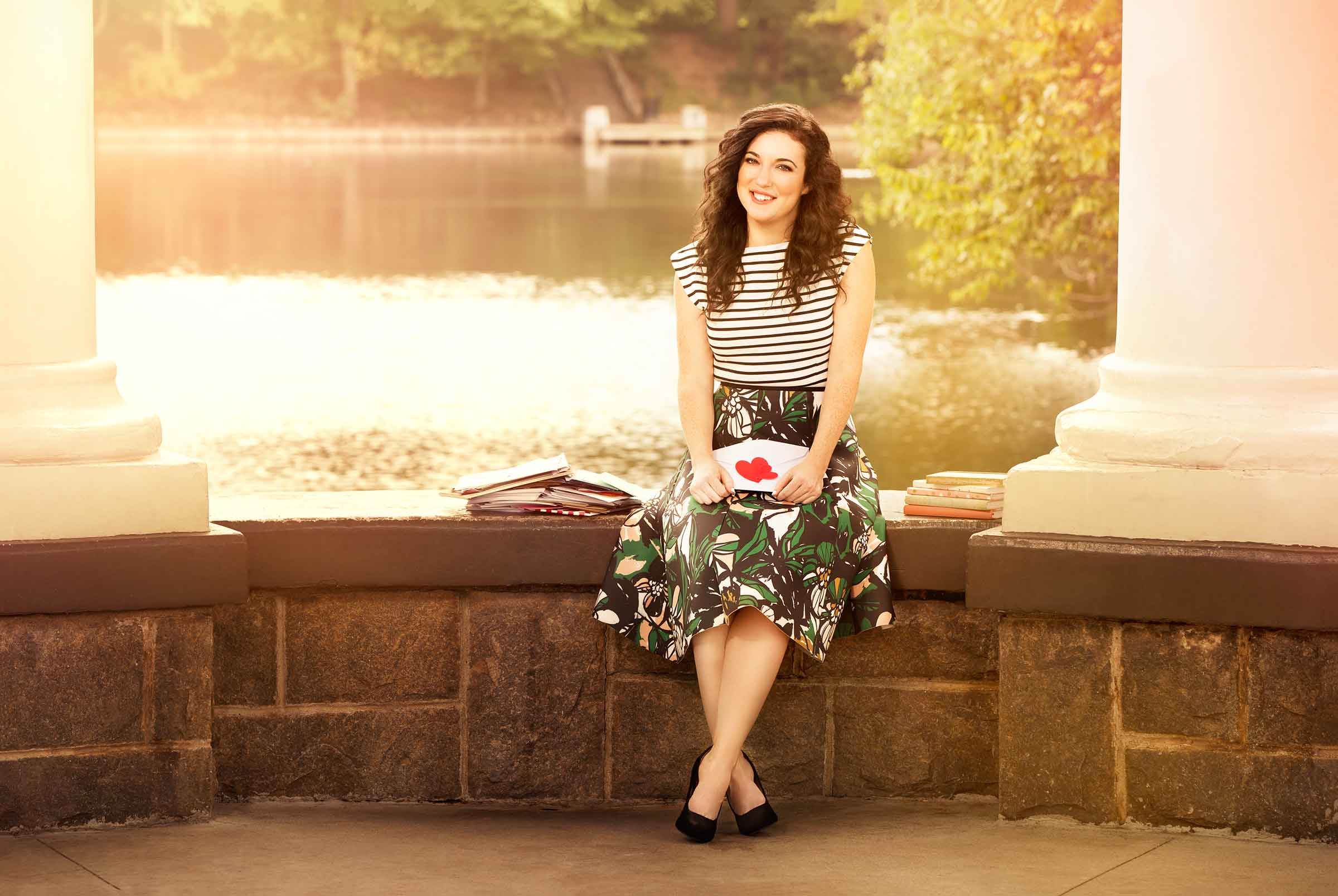
Hannah Brencher left a note on the subway for a stranger. What came next was an abundance of love.

Ilooked down at my shoes as people filled the train, and then I saw her. I saw her beat-up unlaced construction boots first. I followed the shoes, laceless hole by laceless hole, all the way up to the face of an old woman. She was tiny. She had a slight slump in her shoulders. She wore a bright red cap. Wisps of gray poked out from beneath it.
As I watched the woman, I thought about the letters my mother wrote and how she must have known an ordinary piece of loose-leaf paper morphs into a love letter when a person puts her self into it. Then I remembered the notebook in the belly of my bag. I would write the woman a note and give it to her as I exited the train, I decided. I could drop it at her feet.
I pulled the notebook out of my bag, turned to a new page, and began writing a letter. The words spilled out of me.
When I looked up, the woman was gone. I left the letter in my notebook, unsure of what to do with it now that she would never know that it was meant for her.
After I wrote that letter, more letters to other people I observed came marching out of me, one by one, until soon I had filled up the notebook.

Backon the train, just a few days later, the plan became clear. I was going to leave the letter I wrote to the woman on the subway for someone else to find. Then I would scatter other love letters all over New York City. And once I had set each one in its place, I would write even more. And you want to know why? Because it made me feel something.
I tried to imagine what would make me pick up a letter if I found it on a random subway train or in a coffee shop thinking it might have been for me all along. I settled on something simple: If you find this letter … then it’s for you. I wrote those words on my first letter. I folded the letter and placed it behind me. When I got to my stop, I planned to let the letter slip down onto the seat as I walked away.
I left the letters everywhere I could. I was playing Juliet to the city.
At Grand Central Terminal, I waited for the subway doors to open and then busted out of my seat quickly. Darting through the doors, I kept walking faster and faster once my feet hit the platform. My nerves surged. There was a whiff of adrenaline as I got farther away from the train, disappearing into the city.
During the fall of 2010, I kept tucking and leaving, tucking and leaving. I left the letters everywhere I could. I propped them on bathroom sinks. I slid them into coat pockets in department stores. I left them in fitting rooms. I would stick them into the seats at work when I would attend large meetings. I was playing Juliet to the city.
In the months that followed, Brencher started her own site, MoreLoveLetters.com, about her project, inspiring others to write and leave letters in their own communities. Now the website connects her both to strangers in need of love letters and to those who want to write them.
Abouta year later, a woman wrote to me about her friend Briana, a single mother struggling to pay the rent. I typed out Briana’s story and published it on the website, encouraging anyone who read it to mail me letters of encouragement for Briana. I decided that at the end of the month, I’d send Briana a bundle of love letters.
A week later, my heart sank as I walked into the town post office and unlocked PO Box 2061. It was nearly empty. There was just a single yellow slip.
“This was left in my box,” I told the man at the front of the post office.
“Oh, box 2061,” he said. “You got too much mail, dear. We moved you to a bigger box.”
I walked away from the post office with a lot of mail—and a big idea about human beings: mainly that if you give them something to do, a mission, they will show up. At the end of that month, I marched the love letter bundle for Briana to the post office and mailed it off to her.
“They show you’re not alone and that you’re not struggling for nothing.”
A week later, I got a thank-you e-mail from Briana’s friend. “It’s not that the letters heal you,” she wrote. “They show you’re not alone and that you’re not struggling for nothing.”
After such an amazing response to Briana’s story, I was encouraged to continue. I’d post a new story on the site and then check for letters at the post office every couple of days. The postal worker would emerge from the back room with a heaping stack of letters or a mail crate, sometimes two.
I read every letter, then bundled it up with a note explaining how hundreds of people around the world had come together to write the letters now sitting in the hands of someone who didn’t expect to get mail beyond bills and coupons that day.
Most of us are good. I know that’s always up for debate, but it feels as if, at the core, we are good. And sometimes we lose. We fight for things. We lose the fight for things. We fail. We get lost. Sometimes we don’t show up at all.
We make mistakes. We hurt the people who mean more than the world to us. And we get hurt. We get rejected. We fail tests. We oversleep. We break promises. We break hearts. We doubt ourselves. We drink too much. We laugh too little. And we are hopeful.

Wefound out about Luke (not his real name) from his daughter. She got a rush of surprise one day when she came home and saw a package waiting for her. She knew it was the love letters she had requested for her father. Luke was in his last round of chemotherapy and having a rough morning when the bundle arrived.
Luke and his daughter sat together for hours and read every last one. She wrote, He was filled with so much energy after reading those letters—he’s even begun to make a collage out of them. He plans to frame the collage and hang it proudly on the wall of his office.
Then there was the soldier and his sister. He had the dirt of both Afghanistan and Iraq deep in the grooves of his boots. PTSD hung on his shoulders like a cloak when he finally came home. We mailed him a bundle. One day he called his sister, crying—sitting on the floor and unable to speak—over the letters strangers had sent cheering for him. She told me that one small act had renewed her faith in humanity.

Aboveall stories, I will always go back to Matt’s from Ohio. He e-mailed me one night about two years ago. Matt told me he was getting older. His family and he were disconnected. He didn’t have many friends. He was starting to believe he’d leave nothing behind and he’d be forgotten.
The message was sent with no return address attached. There was no way to write back to him, but I hope he reads these words:
Matt, I want you to know: You were wrong to think you’d be forgotten. And I was wrong to think people couldn’t walk into our lives and shift our histories in an instant. Because you did that for me.